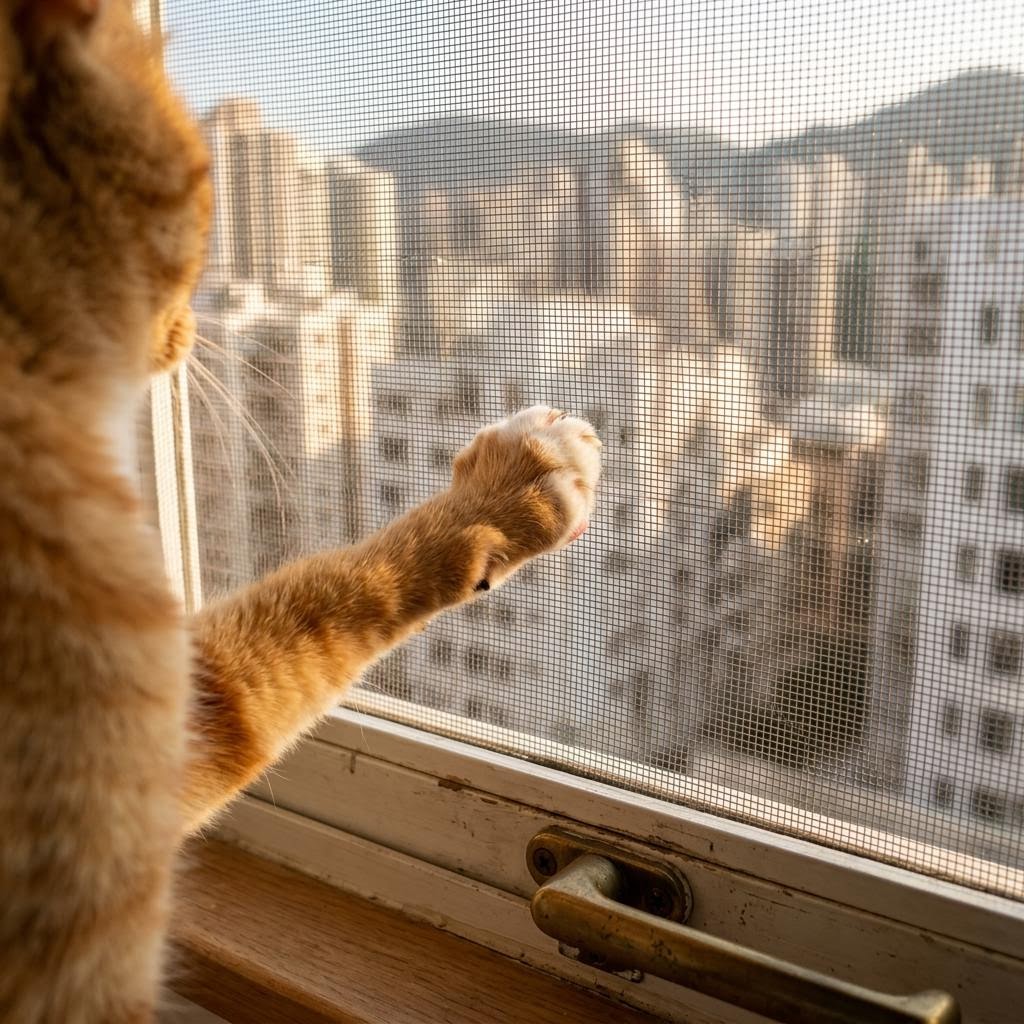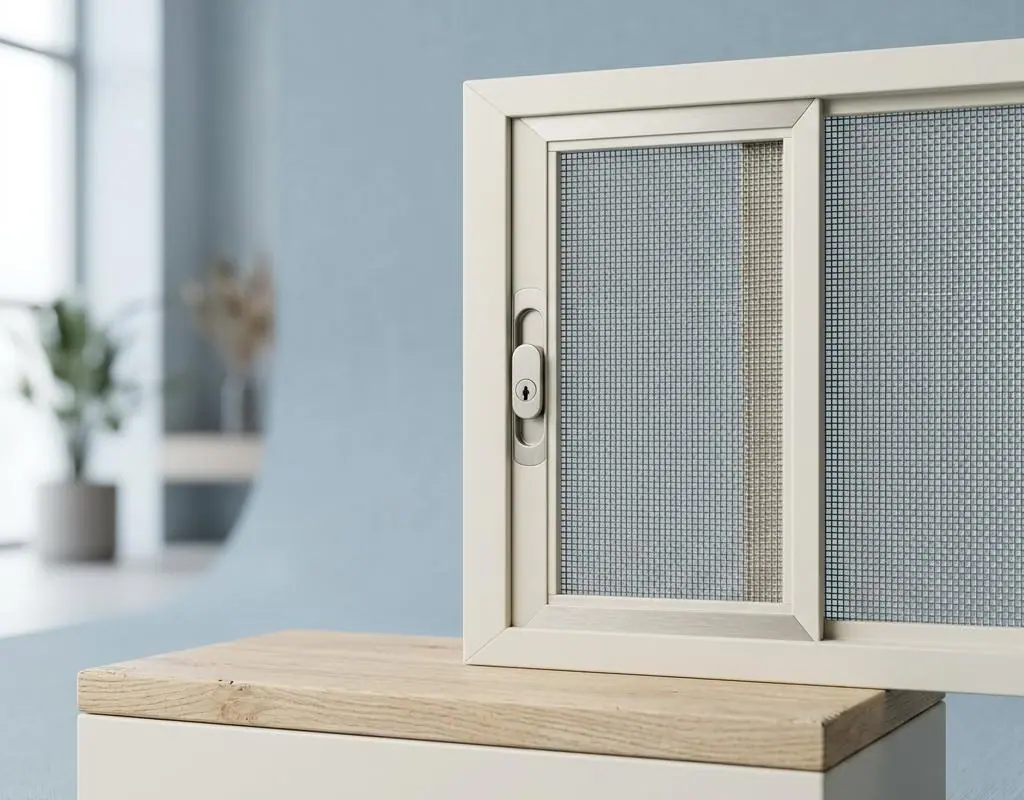
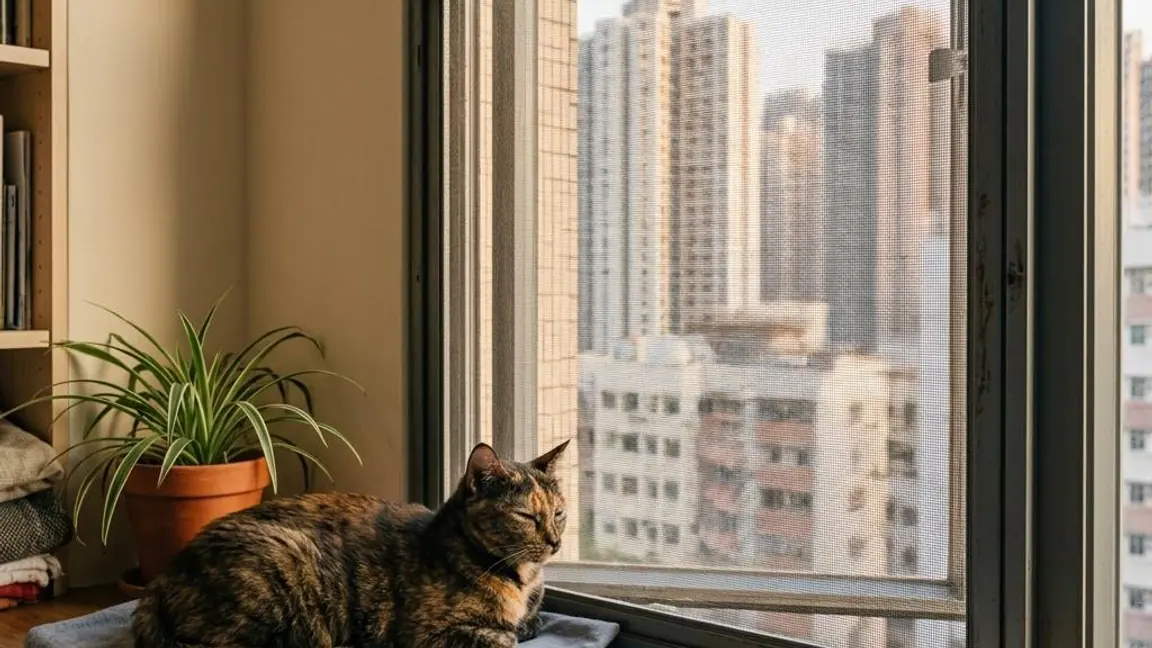
A cat screen is an essential choice for many cat owners. It not only protects your cat from falling from heights, but also prevents other small animals or insects from entering your home. However, understanding the service life of a cat screen to ensure its long-lasting durability is, for our cats, a crucial safety issue. Now let's take a closer look at this topic and provide some methods for caring for and maintaining cat screens.
The Service Life of Cat Screens: Material and Usage Environment
The service life of cat screens mainly depends on two factors: material and usage environment. In general, nylon and metal screens have a longer service life and can generally be used for 5 to 10 years. In comparison, plastic or mesh fabric may have a shorter service life, around only 2 to 3 years; however, these are all service lives under ideal maintenance.
The environment in which it is used will also affect the lifespan of the cat screen. For example, if your cat screen is often exposed to sunlight or is in a high-humidity environment, it may cause the material to deteriorate and further shorten the lifespan of the cat screen.
How to extend the lifespan of cat screens
Here are some ways to extend the lifespan of a cat screen:
Regular cleaning
Cleaning the cat screen is an important maintenance step. You should inspect the cat screen once a month, and use a damp cloth or a gentle cleaning agent to remove dust and dirt. This not only keeps the cat screen clean, but also prevents dirt and dust from accumulating and causing damage to the screen structure.
Avoid prolonged exposure to sunlight
Long-term exposure to sunlight may cause cat screen material to become brittle and shorten its service life, so you should try to avoid placing the cat screen in direct sunlight, especially in the hot summer.