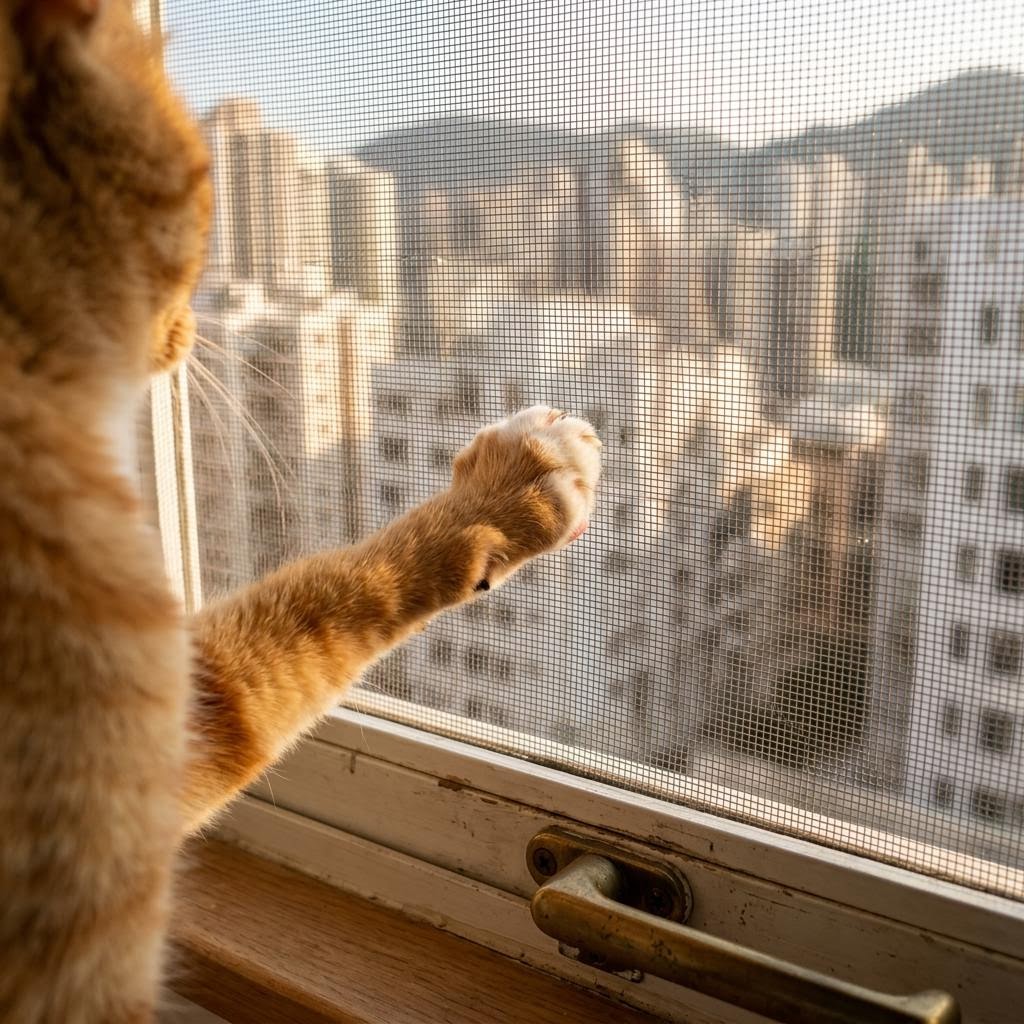
Short answer:For daily self-inspection of a cat screen, first close the window and keep the cat away, then check the mesh, closing edge, frame and latches from indoors. If you find torn mesh, displacement, looseness, or that it cannot be latched, you should first stop using the relevant opening and contact someone for inspection; do not use heavy objects or let the cat test it by impact. 'Five minutes a month' is only a reminder for daily checking; it cannot prove load-bearing capacity or replace professional inspection of the window structure.
What should be done before a cat screen self-check? How often should it be inspected?
Below are suggestions for daily appearance and operation checks, not structural verification, and not safety certification. First, put your cat in a safe place, then inspect from an indoor position where you can stand safely; do not climb, lean out of the window, or remove the fixings.
A routine check can be done once a month; if there has been strong wind, an impact, furniture being moved, or any unusual noise, there is no need to wait until the next month. For parts you cannot see, touch, or are unsure about, let a professional handle them.
The “5 minutes a month” in the title is a reminder to form a habit, not an inspection standard, recommended service life, or qualification period. If there are more windows or abnormalities are found, do not skip issues just to keep within five minutes; where the product operation and maintenance instructions have additional requirements, those must also be followed.
1. Check the screen surface and the sealing around the edges
- Is there any hole, sagging, tear or abnormal deformation in the mesh?
- Whether the perimeter strips, finishing edges, and corners have shifted or there are exposed gaps.
- Whether the security grille panel has cracks, is loose, or has separated from its original position.
- Whether there are items pressing on the mesh for a long time, or the straps being pulled by the cat.
Do not use a cat, heavy objects, or body weight to test the screen surface. A surface that looks intact does not prove fall-prevention or load-bearing ability.
You can compare it with photos taken when the installation was completed to see whether there are gaps at the edges that were not there originally. If the lighting is poor or the view is blocked by curtains, improve the lighting first and check from a safe position; areas that cannot be seen clearly should not be judged as having no problem by yourself.
2. Should the frame, fittings and original window structure be considered separately?
Observe from indoors whether the frame has any obvious tilting, rust, cracks, or loosening, and whether there are any abnormal gaps around the fixing points. If there is a problem with the window frame or wall itself, you cannot assume it is solved just by replacing one piece of mesh.
Do not tighten screws of unknown purpose, apply sealant, or add temporary supports on your own. If something seems loose, stop using it first and arrange to understand the original fixing method and the cause of the damage.
The Buildings Department points out that windows do not have a specific lifespan, and attention should be paid to the condition of components such as window hinges, screws and rivets, with timely maintenance as needed. Daily self-checks of cat screens are not the prescribed inspection under the mandatory window inspection scheme; if the suspected problem is in the original window body, you should consult another appropriate qualified person and cannot judge based on the cat screen appearing intact.
3. What should I do if the buckle won't snap on or the retractable screen gets stuck?
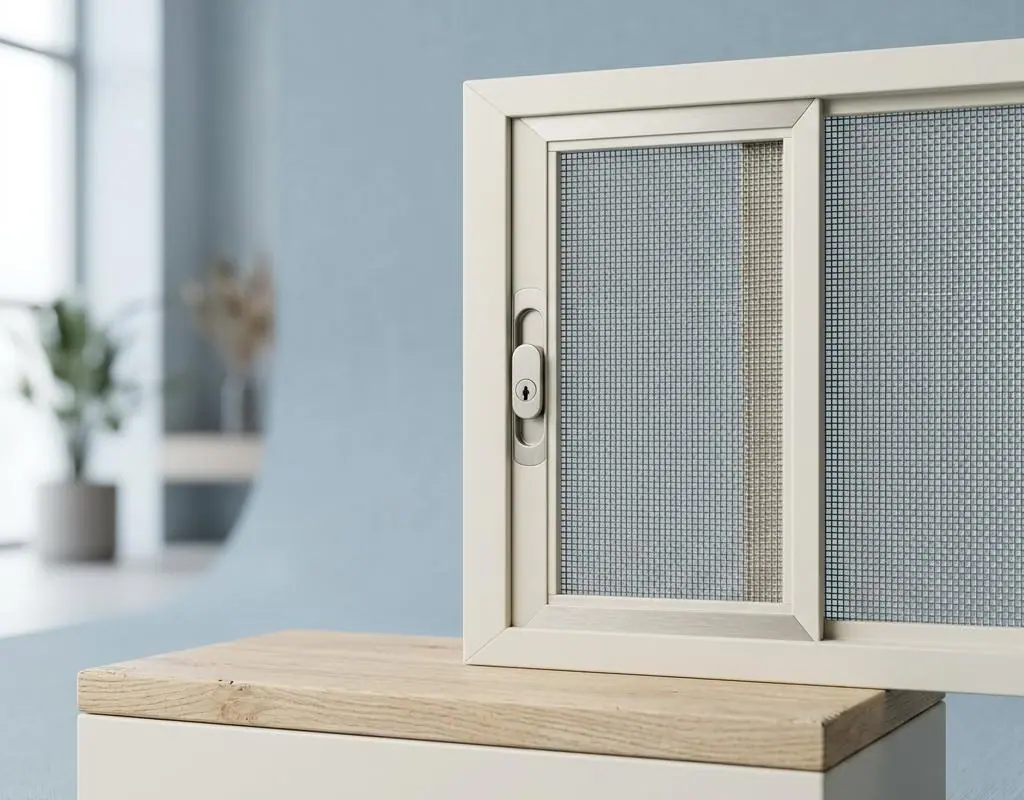
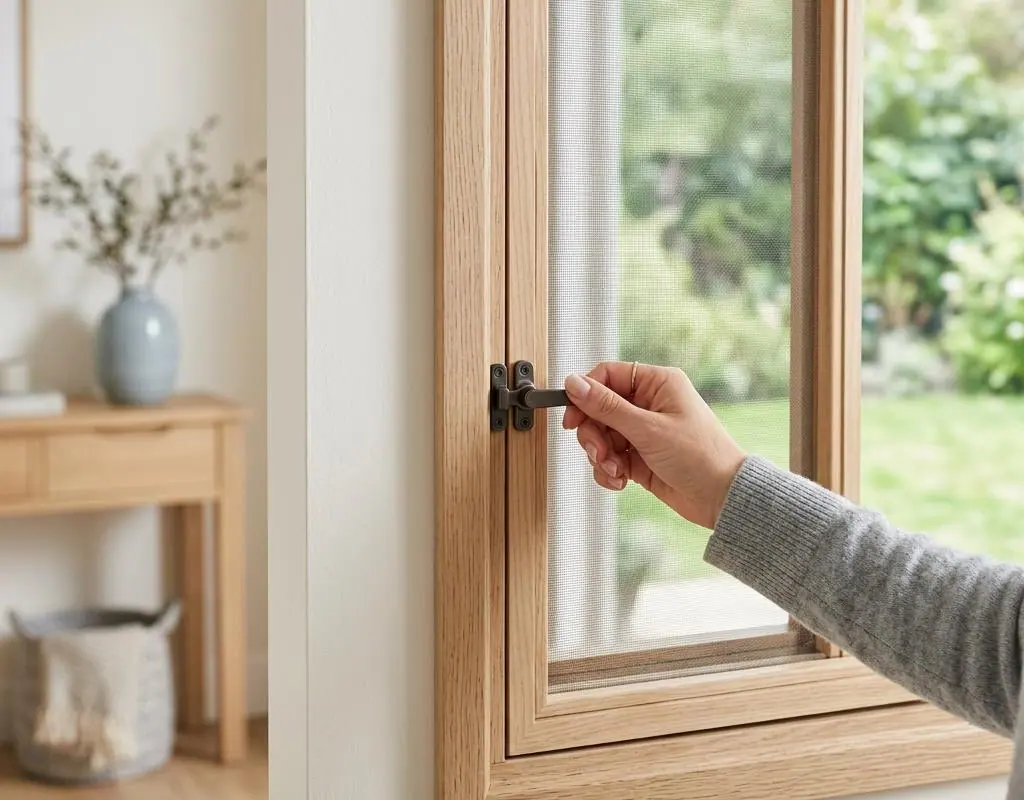
Operate it once only in the normal everyday way, and note whether the latch can fully engage, whether the sliding is smooth, and whether the magnetic attachment fits properly. Any situation that requires forceful pulling, repeated knocking, or manual support to close should not be regarded as normal.
When the mesh is retracted, the door leaf is opened, or the panel is removed, the original position may directly become an opening. Throughout the process, the cat should be kept separated from the site, and after completion the lock should be checked again.
Do not add unknown lubricants yourself just to make the track run smoothly, and do not spray cleaning agents directly into the retractable box or latch. You may remove loose dust from accessible areas according to the product instructions; if resistance, unusual noise, or failure to latch still remains, stop operating and ask how to handle it.
What to do when an abnormality is found
- First close the original window to prevent the cat from approaching; if the window cannot be safely closed, isolate the entire room.
- Take panoramic and close-up photos of the problem from a safe distance, and note the location, time of occurrence and whether there was any impact.
- Contact us via WhatsApp or by phone, explain the style and the problem; do not repeat dangerous actions just to film.
- Before it is confirmed, stop using the relevant mesh. Do not temporarily patch it with tape or rope and then continue opening the window.
For example, if the latch only locks when pressed up against it, then even if the screen has no holes, it should still be handled as an abnormal situation; if the edge of the screen loosens at one corner, you also cannot use “the cat usually won't go near it” as a reason to keep the window open. If the window itself has an immediate risk of coming loose, keep away from it first and arrange suitable emergency assistance.
Repair information can be recorded as: 'Location: ____; screen type: ____; time discovered: ____; issue: hole / displaced / cannot latch / other; whether the window has already been closed or the room isolated: ____'. The installation date or previous quotation, if available, can be provided together, but do not delay isolating the dangerous area for this reason.
Make inspection a daily habit
Record the inspection date, abnormal locations and handling situation, so that follow-up later is convenient. After wiping windows, cleaning tracks or moving furniture by the window, also check that all screen surfaces and locks have returned to the correct positions.
Cat screens cannot guarantee fall prevention, nor can they replace supervision. Even if inspection does not reveal any obvious problems, that does not mean cats can be allowed to climb, be left alone for long periods in a room with open windows, or be left unattended on the balcony.
Useful links and reference sources
- Contact the team: provide photos and inquire about unusual locations
- Cat screen service: check the existing style and operating method
- FAQ: Cleaning, Repair and Opening/Closing Precautions
- Buildings Department, Hong Kong: Common Questions about Window Repairs:Explain the importance of window components, regular inspection and maintenance; window inspection and a cat screen appearance self-check are different tasks.
- The Society for the Prevention of Cruelty to Animals in Hong Kong: Adopting and Caring for Cats:General advice on cat-friendly homes and window protection; not a test or certification of any individual window screen product.