
Back to the window screen encyclopediaCat screens: a barrier designed for the safety of cats

Cat screens: a barrier designed for the safety of cats

Table of contents

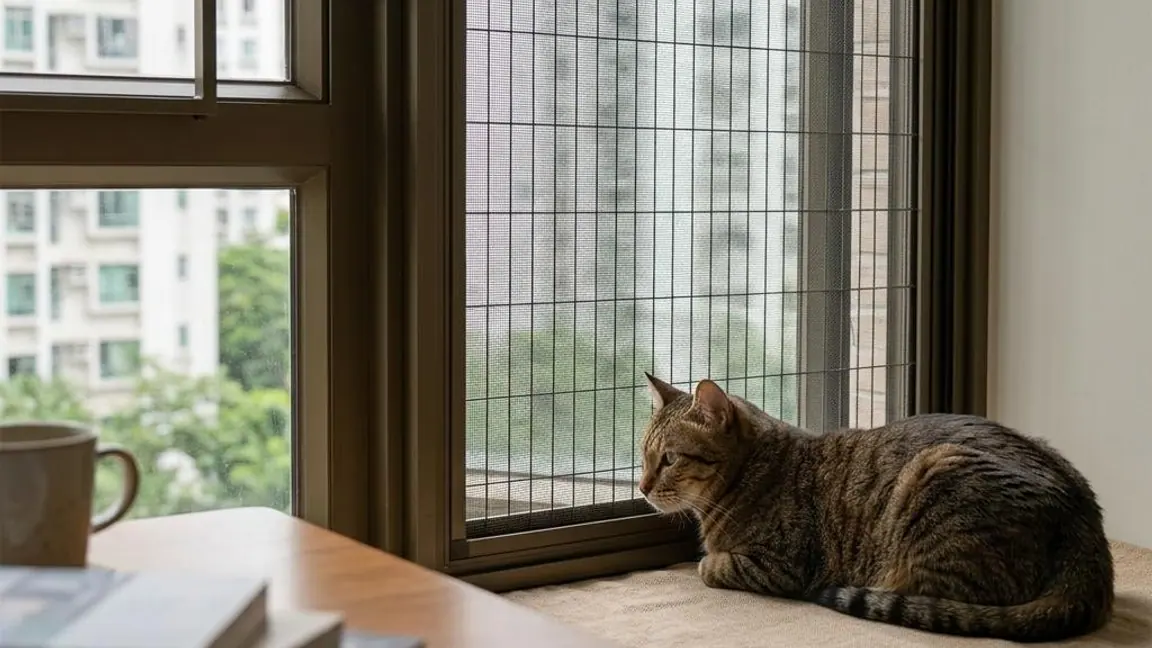
In modern households, cats have become important members of many families. However, as high-rise housing becomes more and more common, cats' safety has also become an issue that owners must pay attention to. As a simple and effective safety measure, cat screens can prevent accidents without affecting cats' freedom. This article will provide a comprehensive introduction to the importance of cat screens, the different types, installation steps, and selection guide.

The importance of cat screens

Prevent high-altitude falls

Falling from height is one of the most common accidents for cats living in cities. Cat screens can effectively prevent this kind of accident, ensuring that cats are safe even when unsupervised.

Maintain ventilation and visibility

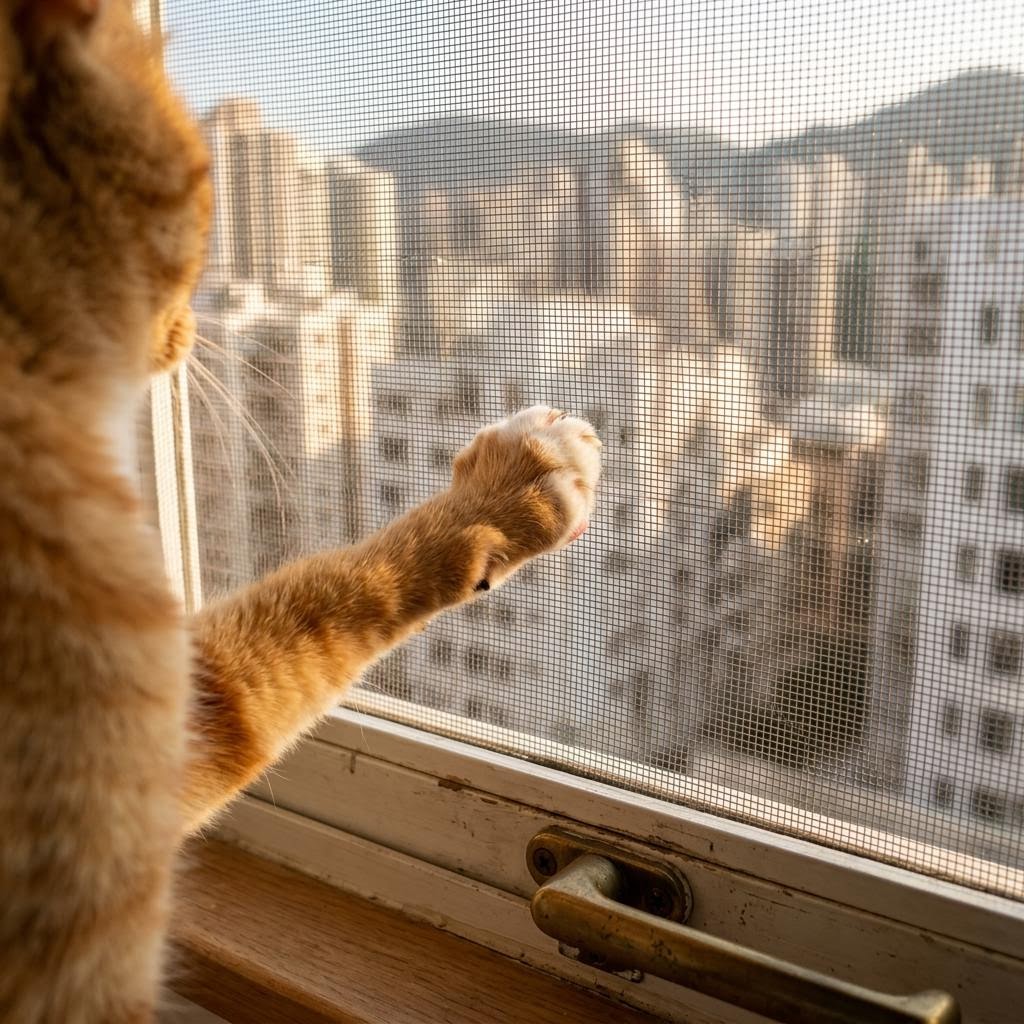
The material of cat screens usually has good ventilation, while not obstructing cats from observing the outside world, satisfying their curiosity.

Reduce the chance of escape

Installing cat screens can prevent cats from escaping, especially for indoor cats, and greatly reduce the risk of them encountering danger when going outside.

Types of cat screens

Standard nylon cat screen

This is the most economical choice, suitable for most households. Nylon cat screens are lightweight and easy to install, but they need regular inspection, because prolonged exposure to sun and rain may make them fragile.

Stainless steel cat screen

If your cat likes to chew, or you want a more durable and long-lasting solution, stainless steel cat screens are a better choice. They are relatively heavy and require firm fixing points.

Velcro-style cat screen

For cat parents renting a place, Velcro cat screens are an ideal choice because they do not require drilling and are very convenient to install and remove.

Custom cat screen

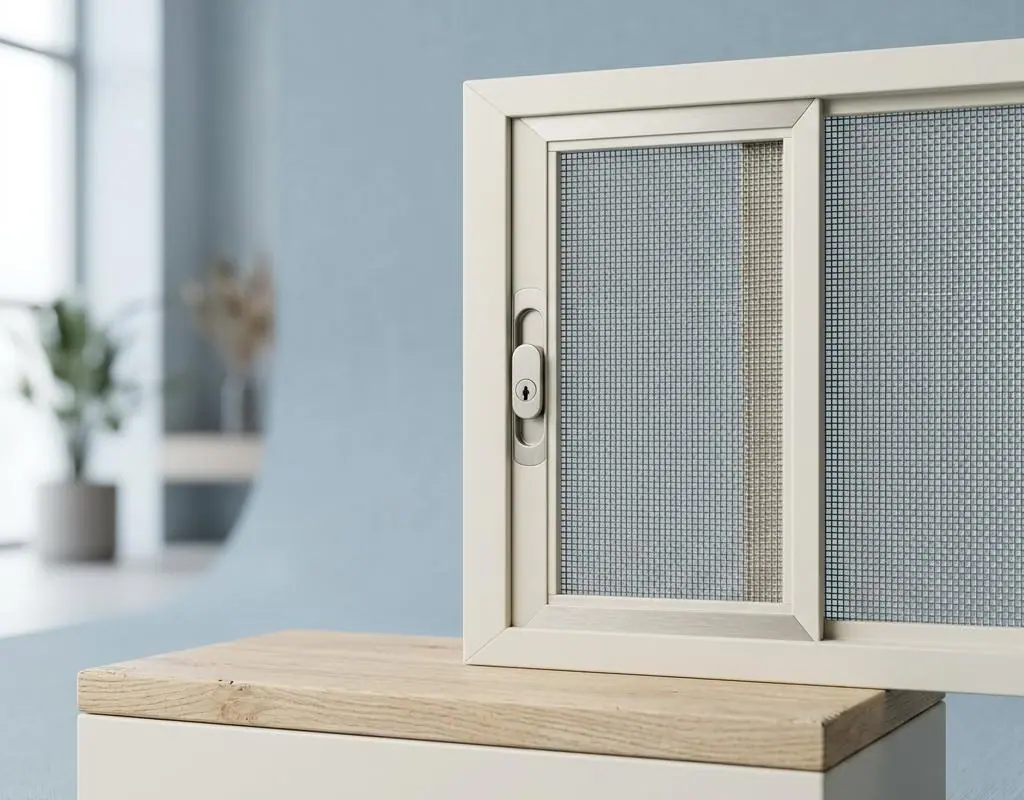
Some professional companies provide custom services, making cat screens according to the specific dimensions of your window or balcony, thereby ensuring a perfect fit with the installation space.

Steps for installing cat screens

Measure the space

First, you should accurately measure the dimensions of the space where the cat screen needs to be installed, including the length, width, and height.
Choose the right cat screen

According to the measured dimensions and your specific needs (for example, the cat’s weight, activity level, etc.), choose the most suitable type of cat screen.

Purchase installation tools

For most cat screens, you may need some basic tools, such as a drill, screws, a hammer, scissors, etc.

Install the bracket or fixing points

Depending on the type of cat screen you choose, you may need to drill holes around the installation area and install brackets or fixing points to ensure the cat screen can be securely fixed.

Fixed cat screen

Secure the cat screen tightly to the bracket or fixing points. If using a hook-and-loop cat screen, follow the instructions to ensure the hook-and-loop fasteners are properly and firmly attached.

Check safety

After installation is completed, you need to carefully check the firmness of the cat screen to ensure that there are no loose or damaged parts. In addition, inspections should be carried out regularly to maintain its safety.

Guide to Choosing Cat Screens

Consider climate factors

In areas with heavy rain or strong winds, choose more weather-resistant materials, such as stainless steel cat screens.

Consider the cat’s characteristics

If your cat likes to climb or chew, you should choose a stronger cat screen material.

Consider the visual effect

Cat screens should not be too noticeable, so as not to affect the appearance of your home. Choose cat screens whose colour and design can blend into the environment.

Consider the budget

Set your budget range and look for the best options within that range. Stainless steel cat screens are usually more expensive than nylon cat screens, but they last longer.

Frequently asked by readers

FAQ

3 FAQs related to this article
Q1What is the difference between cat screens and insect screens?

Mosquito nets are mainly used to prevent mosquitoes and insects. The mesh is relatively fine but is not necessarily claw-resistant, and it is not a pet barrier either; cat screens mainly use more claw-resistant materials or structures, and are used to reduce the chance of cats contacting the outside of the window. Most styles also have mosquito-prevention functions.

Q2After installing cat screens, can they completely prevent cats from falling from heights?

Guarantee cannot be made. Cat screens can reduce the risk, but no window screen can replace locking the window and daily supervision. Please check the screen mesh and fixing points regularly.

Q3Which cat screen is most suitable for my home?

Depending on the window type, the cat's personality, the fixing surface, and the budget. You can compare lockable full-open / triple-slide cat insect screens, Italian cat insect-proof roll-up screens, magnetic types and hinged-door types; transparent window grilles must also be assessed according to the fixing method. The insect-proof data for ordinary HD, Japanese ultra-high-definition, and adhesive insect screens is not enough to prove suitability as pet barriers. Recommendations will be made on-site during measurement according to the actual situation.

View all FAQs

Continue reading

Related guides

Handled by dedicated staff

Related services

View full price list

Professional assistance

Want to learn about Cat screen installation?

Send us photos of the installation location so we can understand the style, measurement and quotation arrangements.

The button will only open WhatsApp and prefill a message; it will only be sent after you confirm it.