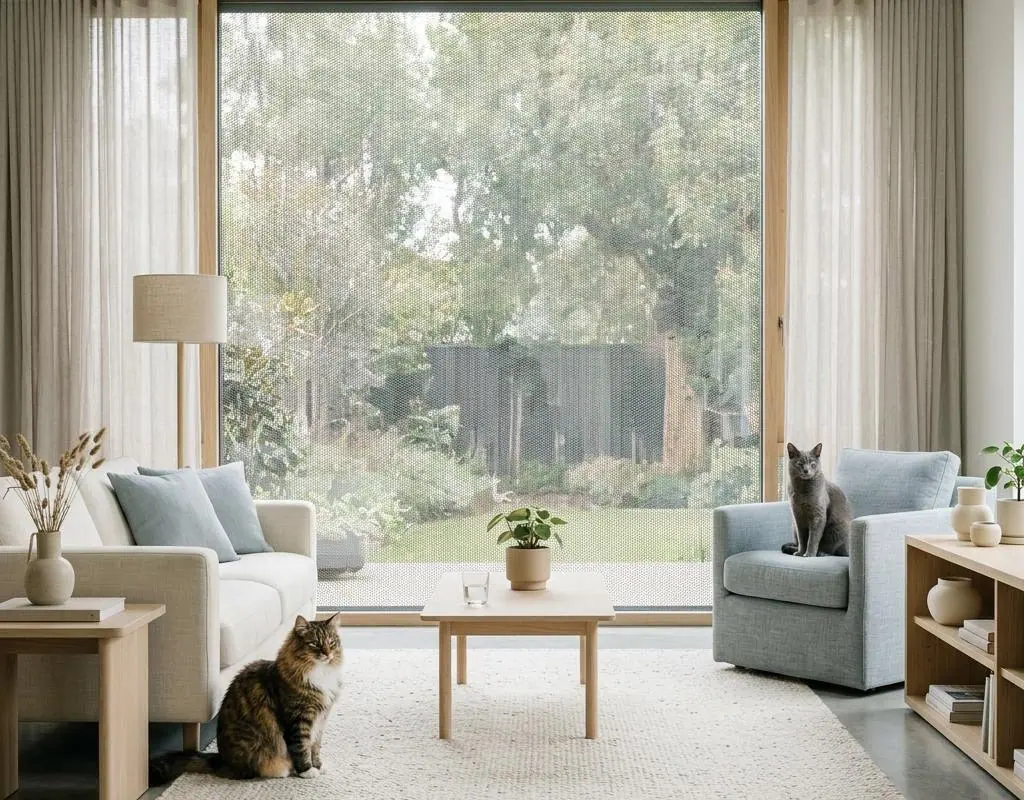
Short answer:When planning window screens for a multi-cat household, the key is not just choosing a stronger screen, but finding all accessible openings, so every family member can properly lock them, and arranging separate spaces for opening the screen, cleaning, or when visitors come. The number of cats cannot be directly converted into load-bearing requirements, and you cannot test the screen with multiple cats.
First record how each cat approaches.
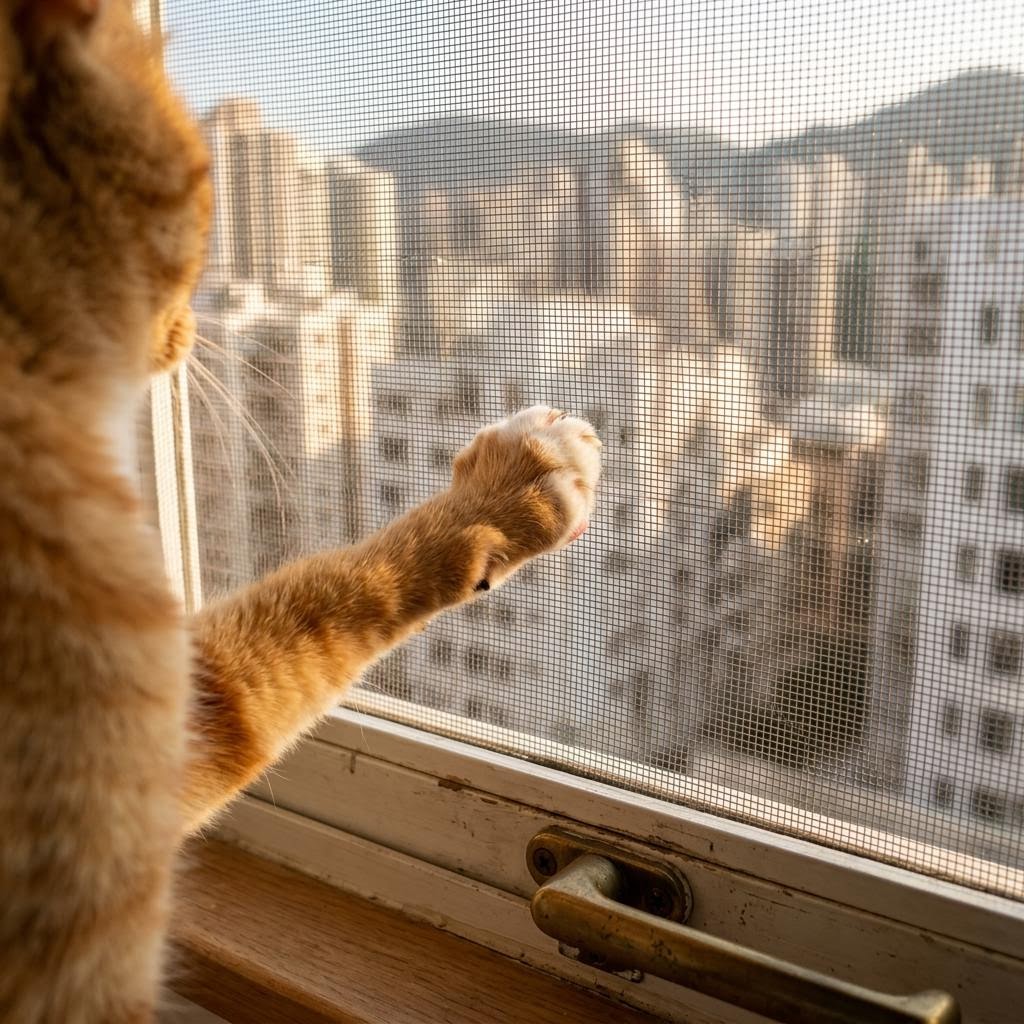
Note which cats sit on the windowsill, scratch the screen, jump toward the window from furniture, or slip into other rooms when the door is opened. The aim is to explain the actual usage situation, not to infer on your own how many cats a certain screen can support.
As kittens grow, new cats are added, or furniture is rearranged, the route may change. Do not decide based only on the quietest cat, or on the brief behavior on the installation day.
How should the openings of the whole house be planned by zone?
List the windows in each room that are normally opened, occasionally opened for cleaning, and usually kept closed. Even if a room does not allow cats in for the time being, you should still consider whether family members, visitors and cleaning can continuously manage the door to that room.
For places where cats may approach, the cat-keeping use should be confirmed, and you cannot simply use an ordinary insect screen as a barrier because the room is used less often. Any unopened opening needs a clear management arrangement.
What should family members and visitors know?
- Which windows or screen surfaces must not be opened by yourself.
- How to tell whether the lock buckle is properly closed.
- Who will check before leaving the room, and who should be contacted if an abnormality is found.
A real demonstration is clearer than the words "be careful the cat may run out." If any family member is not familiar with the operation, you can raise this first when choosing the product, so as to reduce later reliance on forced pulling or a half-locked state.
How do multi-cat households take turns cleaning by the window?
First arrange a space where no work will be done and the door can be closed, confirm that every cat has been settled, and only then start opening the screen or cleaning. Do not assume that only the one that usually moves around will appear and that the others will not.
After completing one area, first restore the mesh and close the lock, then open the room and handle the next area. If the cat is not suitable for this isolation arrangement, please seek appropriate care advice in advance.
Should we just choose the most expensive or thickest option?
The style should match the window type, fixing position, locking method, and cleaning method. The number of cats does not directly prove that a certain type of mesh is needed, nor does choosing a more expensive grade guarantee that supervision is no longer needed.
Hand over each cat’s habits and the family’s operational needs to the team, and request an explanation of the limitations. Product names, the feel of the material and photos of light transmission cannot replace an on-site assessment of the entire structure.
What changes need to be reviewed again in the future?
After adding a cat, changing to a cat perch, replacing curtains or doing other work, recheck the original window path and operating space. If scratches, edge movement or lock abnormalities are found, stop using the relevant opening first.
The Society for the Prevention of Cruelty to Animals in Hong Kong reminds cat-owning households to pay attention to window protection; the relevant advice is not a load-bearing certification. Do not have multiple cats push and test it, and do not regard the mesh surface as an installation that can guarantee fall prevention.
Useful links and reference sources
- Cat screen service: style and installation assessment
- Curtain services: fabric and usage arrangements
- Full price list: check styles, units and reference prices
- Enquiry and appointment: provide on-site photos and usage needs
- The Society for the Prevention of Cruelty to Animals in Hong Kong: Adopting and Caring for Cats:General cat-keeping advice for the protection of residences and windows, and not a test, load-bearing certification or recommendation of the products on this site.
- Buildings Department, Hong Kong: Common Questions about Window Repairs:Window components will be affected by use and the environment, so they must be properly inspected and maintained; window body inspection is different from self-inspection of the window screen.