Back to the window screen encyclopediaCreate the perfect cat screen

Create the perfect cat screen

Table of contents

For cat lovers, creating an ideal home where safety and freedom coexist is essential. Cat screens, a type of safety screen specially designed for cats, provide us with a practical and feasible solution. This article will explain in detail how to choose and create the perfect cat screen, so that your beloved cat can move freely at home while staying safe.

The importance of cat screens

In modern city life, giving cats enough space to move around and ensuring their safety is a major challenge for owners. For cats that especially like to explore, windows, balconies, and terraces are often the targets of their curiosity. However, these places are also the most dangerous for cats, especially in high-rise apartments. The risk of falling from height, as well as the possibility of escaping, leaves cat lovers like us deeply worried. Therefore, many owners choose to install cat screens to prevent cats from accidentally falling or escaping.

How to choose the right cat screen

Material

The material of cat screens has an important impact on their durability and safety. Generally speaking, woven nylon or plastic cat screens are common choices. Cat screens made of these materials are not only durable, but can also withstand cats’ scratching. However, if your cat is a “heavy scratcher,” then metal cat screens may be a better choice. Although they may be more expensive, they provide greater safety and a longer lifespan.

Mesh size

The mesh size should be chosen according to your cat's size. Generally speaking, the mesh holes should be smaller than your cat's head to prevent it from trying to squeeze through and getting stuck. For kittens or small cat breeds, choosing a finer mesh holes size can provide better protection.

Installation method

The installation method of cat screens is also an important consideration. Some cat screens require professional installation; this method is usually more secure, but there may be additional installation fees. Some cat screens also offer a DIY option, which can save costs, but may require you to spend more time and effort. When choosing, you need to consider your needs and abilities. If you are confident with tools and DIY, you can choose to install it yourself; otherwise, professional installation service may be a better choice.

How to install a cat screen

Here is a basic step-by-step guide, which may vary depending on the cat screen you choose and your environment:

Measure the area
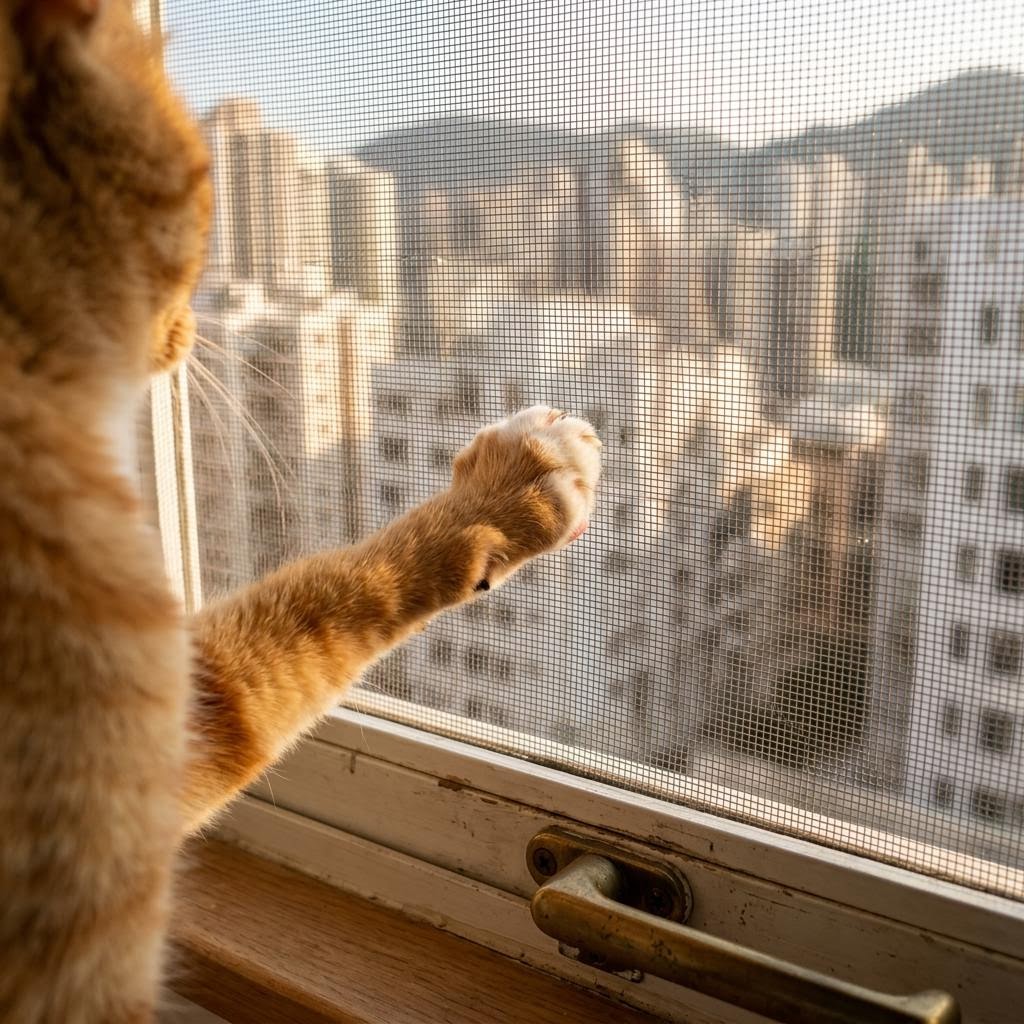
First, you need to accurately measure the area where you want to install the cat screen, making sure you measure the entire window or balcony size, including depth and width.

Buy cat mesh

According to your measurement results, choose a suitable cat screen and make sure the screen is a little larger than the area you need to cover, so that you can cut it as needed.

Install the fixing device

You will need some fixing devices to secure your cat screen, such as hooks or ropes, and these fixings should be firmly attached to your window or balcony.

Install cat screens

Tie the cat screen to the fixing devices, and make sure it covers the entire area. The screen should be pulled taut to prevent it from sagging or bending when the cat climbs on it.

Check safety

Finally, you should check the safety of the cat screen to make sure it is firmly fixed in place and that your cat cannot escape from anywhere.

Maintenance and replacement

Depending on the quality of the cat screen and your cat's behaviour, the cat screen may need to be replaced regularly. Check the condition of the cat screen regularly for any possible damage or tears. If any damage is found, the cat screen should be replaced immediately to ensure your cat's safety.

Creating an ideal cat screen requires attention to many factors, including the material, mesh size, installation method, and regular maintenance and inspection. Although this may take some time and effort, providing your beloved cat with a safe and free home is absolutely worthwhile.

Frequently asked by readers

FAQ

3 FAQs related to this article
Q1What is the difference between cat screens and insect screens?

Mosquito nets are mainly used to prevent mosquitoes and insects. The mesh is relatively fine but is not necessarily claw-resistant, and it is not a pet barrier either; cat screens mainly use more claw-resistant materials or structures, and are used to reduce the chance of cats contacting the outside of the window. Most styles also have mosquito-prevention functions.

Q2After installing cat screens, can they completely prevent cats from falling from heights?

Guarantee cannot be made. Cat screens can reduce the risk, but no window screen can replace locking the window and daily supervision. Please check the screen mesh and fixing points regularly.

Q3Which cat screen is most suitable for my home?

Depending on the window type, the cat's personality, the fixing surface, and the budget. You can compare lockable full-open / triple-slide cat insect screens, Italian cat insect-proof roll-up screens, magnetic types and hinged-door types; transparent window grilles must also be assessed according to the fixing method. The insect-proof data for ordinary HD, Japanese ultra-high-definition, and adhesive insect screens is not enough to prove suitability as pet barriers. Recommendations will be made on-site during measurement according to the actual situation.

View all FAQs

Continue reading

Related guides

Handled by dedicated staff

Related services

View full price list

Professional assistance

Want to learn about Cat screen installation?

Send us photos of the installation location so we can understand the style, measurement and quotation arrangements.

The button will only open WhatsApp and prefill a message; it will only be sent after you confirm it.