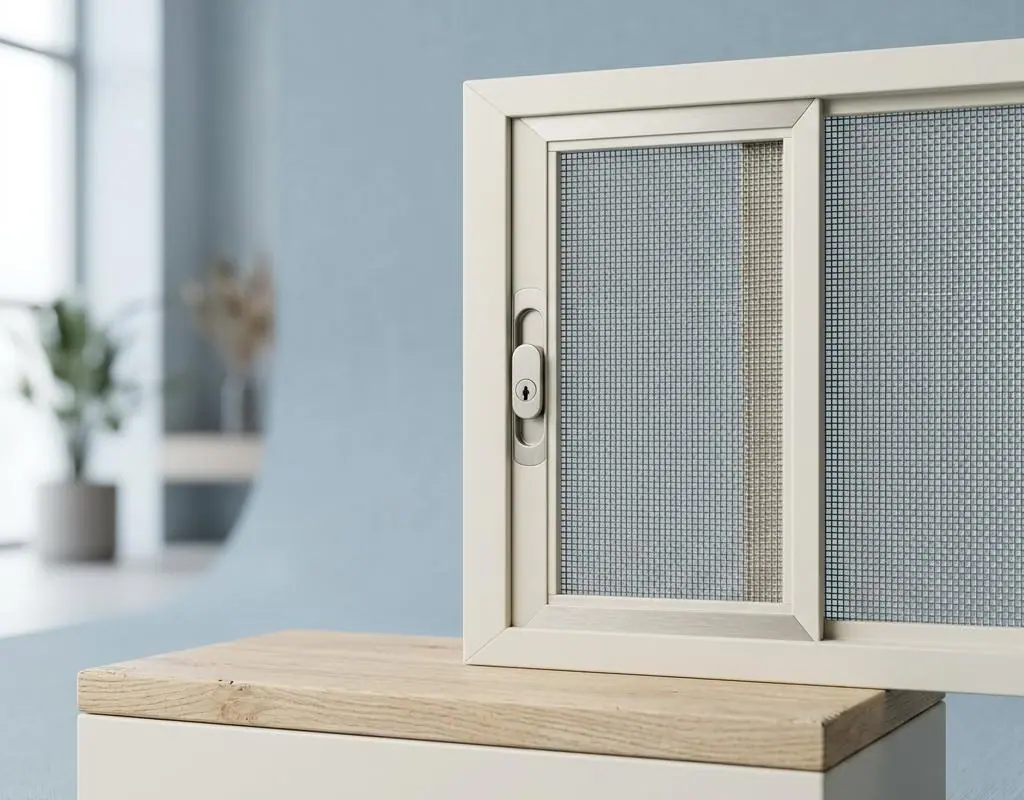
Mosquito screens are mesh items installed to prevent mosquitoes and other insects from entering your room. If your home has windows or doors without mosquito screens installed, this article will provide you with detailed mosquito screen installation steps. This is a DIY (do-it-yourself) method that does not require professional skills, only some basic tools and patience. Mosquito screens are an effective tool that can prevent insects, especially mosquitoes, from entering your home. If you plan to install mosquito screens yourself, this article will provide you with a detailed step-by-step guide.
Measure the size of the window or door
First, you need to accurately measure the dimensions of your window or door. Use a tape measure to measure the width and height of the window or door, and record them. Please make sure to measure from the inner edge of the window or door to ensure the insect screen can fully cover the opening.
Purchase the required materials
Once you have the dimensions, you can go and buy the insect screen and other materials you need. You can find these materials at most hardware stores or home improvement stores.
The materials you need include:
Cutting insect screens and frame
Lay the insect screen on a flat surface and use your measurements to mark the correct dimensions. When cutting the insect screen, make sure to leave some extra space on both sides so that the insect screen can be fixed to the window or door. Use a sharp knife to cut the insect screen.
At the same time, you also need to make the same measurements and cuts for the frame. Generally speaking, the length of the frame should be twice the width of the window or door, while the width needs to be slightly longer than the height of the window or door, to ensure the insect screen can fully cover the opening.
Install the frame
Place the cut frame at the edge of the window or door, and secure it with screws. Make sure the frame is stable and fully aligned with the edge of the window or door.
Install an insect screen
Then, pull the cut insect screen tightly across the frame and secure it with rubber beading or mesh strips. Please ensure that the insect screen is tightly attached to the frame, with no gaps or loose areas.
Check and adjust
Finally, carefully check your work to make sure there are no looseness or gaps. If you find any problems, please adjust them immediately to ensure the insect screen can fully
Installing mosquito screens is not difficult; it only requires some basic tools and patience. Through this article, we hope you have learned how to install mosquito screens yourself and understood the importance of regular maintenance. Installing mosquito screens can not only protect you and your family from mosquito disturbance, but also add a sense of security to your home.